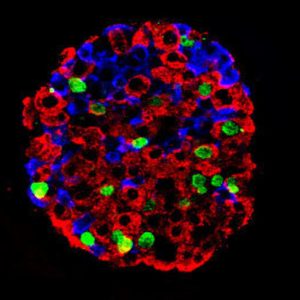

The pig lung alveolar system has proven to be an important model in respiratory science research. It has striking similarities with the human lung in terms of anatomy and physiology. Swine models plays pivotal role in veterinary science and biomedical research. Porcine respiratory tract have close resemblance with human respiratory tract.
The similrity is present in terms of structure, immune responses and gas-exchange mechanisms shares high similarity with humans. These attributes have promoted the emergence of swine lung cell culture models, making the porcine alveolar macrophages the model of respiratory disease, host-pathogen relationship, drug development, and immunomodulation.
The Importance of Swine Lung Alveolar Cells in Research
The functional element of respiration is the alveolar compartment in which the exchange of gases occurs. The structure is highly organized consiting of:
- Epithelial cells
- Surfactant-secreting pneumocytes
- Resident immune cells (e.g. porcine alveolar macrophages)
Primarily Type I alveolar epithelial cells lines the gas-exchange surface. Type II cells aid in production of surfactants that keeps alveoli stable and prevent them from collapsing under the alterations of pressure. These functions are accurately recapitulated in vitro and in vivo in Swine Lung Alveolar cells and allow studies to be extended beyond the fundamental biology of the lung to disease and host immunity.
Swine Lung Cell Culture: Technical Principles
Successful swine lung cell culture begins with appropriate tissue collection and cell isolation. The steps involves:
- Primary cultures of alveolar macrophages from bronchoalveolar lavage
- Washed with saline or buffer solution
- Isolation of viable immune cells
- Porcine alveolar macrophages cultured in nutrient media containing serum and antibiotics
- Culture grown are adherent and native functions
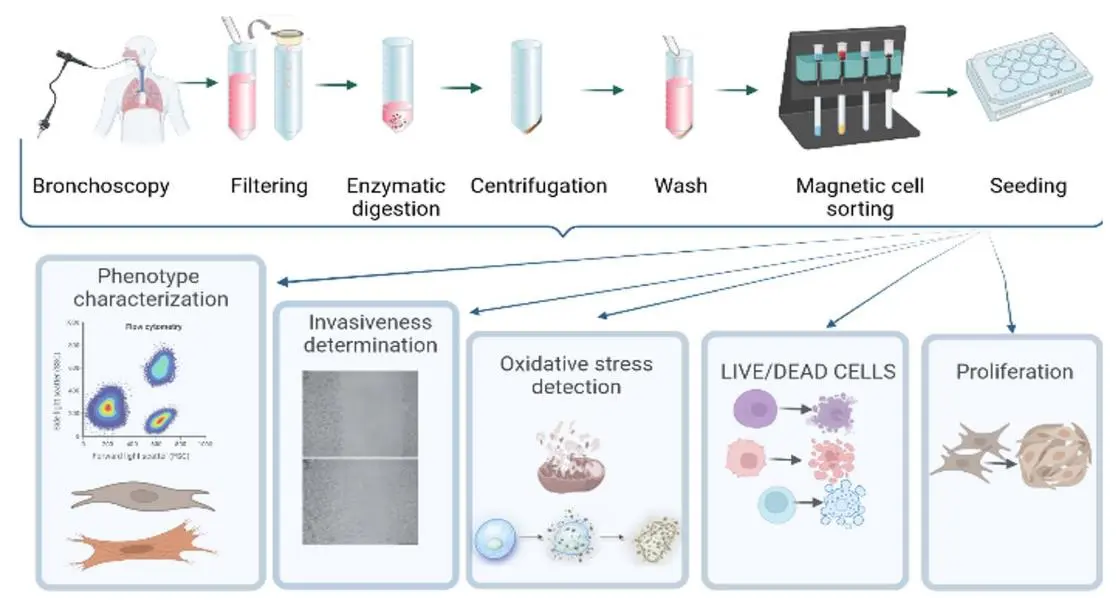
From: Cells 2022, 11(9), 1441; https://doi.org/10.3390/cells11091441 (CC BY) license (https://creativecommons.org/licenses/by/4.0/).
Precision-cut lung slices (PCLSs) represent a new advanced offshoot of cell culture methods. Rather than isolation of cell types, PCLSs possess native tissue architecture with alveolar and bronchiolar cells intact in situ. Thus, viral infection, inflammatory responses, and pharmacologic interventions can be studied in a context that better recapitulates the in vivo lung environment than monolayer cultures. It is an ex vivo model that has been confirmed for use in respiratory coronavirus infection studies and immunological profiling.
Porcine Alveolar Macrophages: Core Immunological and Disease Model Representation.
Porcine alveolar macrophages are highly important sentinel cells in swine alveoli. The macrophages are involved in various cellular signalling. They are responsible for clearing cellular debris and pathogens present in the system. It regulates pulmonary immune responses. Recent works have highlighted the heterogeneity of macrophages in swine lungs. The outcome revealed distinct populations with autofluorescence and phenotypes. The activation of macrophage type depends on the type of the bacterial infection.
Research on respiratory pathogens relies on macrophage culture. Swines infected with porcine reproductive and respiratory syndrome virus (PRRSV), result in unique macrophage reaction. This leads to viral replication and different cytokine manifestations. Engineered cell lines express key receptors such as CD163. This enables robust viral replication.
These serve as are vital tool for virology research, vaccine development, and antiviral screening.Such recent work in single-cell transcriptomics has already offered new insights into shared dynamics of immune response in Porcine Alveolar Macrophages in co-infection with PRRSV and African swine fever virus (ASFV), with a layer-specific view of host response mechanisms.
Swine Lung Alveolar Models: Applications
These models are widely applicable in various research field:
- Infectious Disease and Host Responsiveness
Swine alveolar macrophage cultures are the first-line platforms for understanding pathogen entry, replication, and immune evasion. Swine lung alveoli harbor sentinel immune cells called porcine alveolar macrophages. these cells clear the debris, phagocytose pathogens, and coordinate cytokine signaling to induce local immune responses.
- Cytokine Signaling and Immunomodulation
The inflammatory cytokine response on viral or bacterial infections provide clear overview on innate immunity. These research outcomes are used for developing immunomodulatory therapies for humans.
- Toxicological Evaluation and Drug Testing
Swine lung alveolar system are physiologically relevant systems for drug safety evaluation and determination of toxilogical profile. Evaluation of environmental toxins and nanoparticle toxicity are performed effectively. In-vitro system are often incapable for recreating true lung responses.
- Regenerative and Translational Medicine
Current research focuses on the regenerative capacity of alveolar progenitor cells and bioengineered lung tissue constructs for therapautic use. The combination of swine lung cells and tissue engineering is the future in translational therapy.
Challenges and Limitations
Swine Lung Cell Culture models have limitations, despite their translational strength. The logistical difficulty of keeping large animals and the ethical concern limit its widespread use in small laboratories. The major challenge includes:
- High costs of operation
- Genetic differences between pigs
- difficulty in genetic manipulation
- limited success in CRISPR technique
Future Directions
The future of swine pulmonary research is at the frontier of novel cell culture methods, omics profiling, and computational models. The promising avenues includes:
- Lung architecture scaffold platforms and 3D organoid.
- CRISPR technology is used to develop porcine models to investigate genetic respiratory disorders.
- The use of AI to predict immunological responses and the impact of drugs.
- Direct translation of porcine models to human pulmonary medicine by comparing cross-species.
Product-Related Queries, Or Partnership Inquiries
FAQ’s
Q- How are porcine alveolar macrophages isolated from swine lung?
Porcine alveolar macrophages are harvested from bronchoalveolar lavage. The sterile fluid is added into lung segments, recovered and centrifuged. The isoloated macrophages are cultured for future studies.
Q- Why are swine lung alveolar models better in comparison with rodent models in pulmonary studies?
Swine lungs share close anatomy with the human lung. Swine lungs are suitable model for translational research for respiratory infections, immunomodulation and drug response.
Q- What are the primary research applications of swine lung alveolar cells?
The primary research application includes study of infectious disease, drug testing, toxicology, cystic fibrosis, regenerative medicine research, etc.
Q- What are the limitations of using swine lung alveolar cells?
The major challenges include logistic and ethical clearance. The use of large animals incur more cost compared with rodent model