

Introduction
Animal cell culture research has empowered scientists to advance the quest to understand neurodegenerative diseases and develop effective therapeutics.
The global burden of neurodegenerative diseases is immense, leading to ill health and disability. The Lancet Neurology reports the existence of more than 3 billion cases in 2021 [1]. The top 10 neurological conditions associated with major mortality cases include stroke, migraine, dementia, Alzheimer’s, neonatal encephalopathy, diabetic neuropathy, meningitis, autism, epilepsy, and cancer [1].
Animal Cell Culture Research plays a vital role in biomedical science, fundamentally enabling researchers to understand, diagnose, and develop therapeutics.
What is Animal Cell Culture Research?
Cell culture research is associated with biotechnological techniques where animal cells are artificially grown in controlled laboratory conditions. The cells are isolated from eukaryotic tissues and are grown for detailed cellular and molecular studies.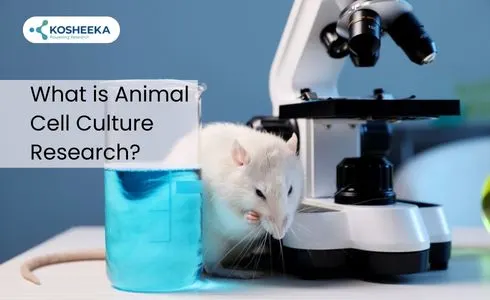
The distinct subtypes of cell culture include:
Primary Cell Culture
- Cell sources directly from animal or human tissue
- Cells are mechanically and enzymatically disintegrated.
- The cultured cells are slow-growing and carry primary characteristics of the original tissue.
- Consists of the original genetic makeup and chromosome numbers as in the original cells.
- Finite lifespan, subcultured and transformed into either cell lines or used directly for experimental purposes.
- Morphology varies depending on source types, with the most distinguished morphology observed in epithelial cells, fibroblasts, and connective tissue
Secondary Cell Culture
- Primary cell cultures are subsequently subcultured and transformed into cell lines.
- Long lifespan, readily available and easy to culture in comparison with primary cell culture
- Cell lines are maintained in optimal capacity and passaged on reaching 80-85% confluency.
- Morphological characteristics remain distinct; the change in morphological characteristics potentially indicates an alteration in cell characteristics
Based on cell culture growth, it is of two subtypes:
Adherent Cells/ Anchorage-Dependent Culture
- Cells grow on a stable, coated, inert surface.
- Cells adhere to the solid, non-toxic surface and differentiate.
- Cells isolated from tissue/ organs that are immobilised or connective tissue
Suspension Cells/ Anchorage-Independent Culture
- Cells grow in suspension, which does not require a coated or supportive surface for cell growth.
- Floats in a liquid medium, subcultured to confluence.
- Includes cell sources that remain in suspension, like blood cells
What are Neurodegenerative Diseases?
Neurodegenerative disease accounts for chronic conditions where parts of the nervous system are damaged. In major cases, the conditions develop progressively. The major degenerative brain disease types include:
- Dementia: Progressive damage to the area of the brain affects neurons in the brain. E.g: Alzheimer’s, Frontotemporal dementia, Lewy body dementia, chronic traumatic encephalopathy (CTE)
- Parkinson’s: Specific neurons in the brain are affected that are involved in coordination and muscle movement control.
- Demyelination: Myelin damage or loss occurs, and neurological signals are compromised. E.g: Multiple sclerosis, NMOSD
- Motor Neuron Disease: Neuron control compromised. E,g: Amyotrophic lateral sclerosis (ALS)
Role of Cell Culture Research in Studying Neurodegenerative Diseases
Cell Culture Research enables researchers to explore various neurodegenerative diseases and their underlying causes at the cellular and molecular levels. The primary role includes:
- Cell culture enables disease Modeling. Researchers use 2D, 3D or co-culture models for studying distinct disease mechanisms and developing their therapeutics.
- Detailed account of understanding neuronal damage, inflammation, and protein aggregation
- Unveiling distinguished cell signalling pathways crucial for protein folding or alteration, inflammation, and neuronal degeneration
- Role of genetic mutations associated with neurodegenerative disease
- Drug development, toxicology profiling, and screening of neuroprotective compounds
- Discovery of potential neuroprotective compounds\
- Drug discovery via high-throughput screening of potential therapeutic molecules
- Co-culture system development for studying neuron-glia interactions
- Stem cell differentiation into neural cell types
What is the Importance of Primary Cell Culture in Neuroscience Research?
In neurobiology, the terms ‘neural’ and ‘neuronal’ are used interchangeably and often confused. ‘Neural’ refers to mixed nerve cell types, whereas ‘neuronal’ has a specific association with neurons. The term ‘neural’ is implied for both primary culture and neural stem cell culture.
Primary neuronal culture involves in-vitro maintenance of live neurons that are extracted directly from the animal (in-vivo) nervous system or human tissue. The cells are maintained live with a supply of adequate nutrients. The growth medium consists of all macronutrients, growth factors, basal salts, and other micronutrients. The cells grow in an adequate atmosphere at 37°C, 5% CO2, and 95% humidity.
The major neural cell type includes:
- Primary neurons/ Nerve Cells: Brain stem cells, cerebral, motor neuron, neural progenitor cells, dopaminergic, cortical, glutamatergic, sympathetic ganglia, substantial nigral, etc
- Glial Cells: Astrocytes, oligodendrocytes, microglia, Schwann cells, Radial glia
What are the Advantages & Disadvantages of Primary Cell Culture?
Advantages

- Closely mimics physiological and cellular behaviour
- Maintains gene expression patterns and cell signalling
- Accurate responses to drug candidates
- Establish preclinical results associated with drug discovery
Disadvantages
- Limited lifespan and restricted proliferation
- Technical complexity in isolation and maintenance
- Variability in the donor, possible morphological variability
- Higher risk of contamination and sample variability
- Difficulty replicating the exact human brain microenvironment
Importance of Cell Culture Services in Research
Cell culture services facilitate acceleration in neurological and neurodegenerative disease research. This includes:
- Increased demand for professional cell culture services in biomedical research
- Isolation of primary cells and characterisation
- Obtaining customised neuronal cell culture models
- Contamination-free, well-characterised, and non-mutated cells
- Cryopreservation and cell banking
- Time and cost saving in tissue procurement and isolation
*Kosheeka, India, is a renowned Cell Culture Research Company that supplies various primary cells and cell lines for research purposes. The cells are superior-quality, well-characterised, and mutation-free.
Applications of Cell Culture Research in Neurodegenerative Disease Drug Development
- Screening of neuroprotective compounds
- Studying cellular mechanisms of protein aggregation (amyloid-beta, tau, alpha-synuclein)
- Evaluation of regenerative medicine approaches (stem cell therapy, exosome therapy, etc.)
- Development of personalised medicine using patient-derived cells
- Preclinical testing before animal and clinical trials
Conclusion and Future Perspective
Cell culture research involves the use of cellular models in modern neurobiological research. This enables researchers and scientists to uncover the underlying cause of neurodegenerative disease and develop their diagnostics and therapeutics. There is a growing impact of cell culture services in accelerating discoveries in neurobiological research.
The future research focuses on the development of an accurate brain organoid model. The integration of AI and cell culture research data enables more advanced research outcomes.
Overall, the establishment of cell culture models is enabling transformative progress in translating bedside observations to bench-based research in neurodegenerative diseases.
References
- World Health Organization. Over 1 in 3 people affected by neurological conditions, the leading cause of illness and disability worldwide. Geneva: WHO; 2024 Mar 14. Available from: https://www.who.int/news/item/14-03-2024-over-1-in-3-people-affected-by-neurological-conditions–the-leading-cause-of-illness-and-disability-worldwide
FAQ’s
Q- What are the primary cell culture advantages and disadvantages?
The advantage includes establishing preclinical studies, mimicking physiological, cellular and molecular signalling, etc. The disadvantage includes donor variability, limited lifespan, complexity in isolation and maintenance.
Q- What is the importance of animal cell culture research in neuroscience?
Animal cell culture enables modelling of nervous neurological networks in controlled laboratory conditions. This enables disease modelling, drug discovery, toxicology studies, genetic manipulation, and regenerative studies.
Q- How do cell culture services support neurodegenerative disease research?
Cell culture service plays a crucial role in enabling researchers to obtain cells of interest commercially. The cells are superior-quality and well-characterised. This saves time and cost for researchers involved in in-vivo culture and isolation of cells from specific tissue or organs.



Thanks for sharing this insightful overview of animal cell culture research and its applications in neurodegenerative disease studies. It’s fascinating to see how diverse cell types, from primary retinocytes to hepatic fractions, are being leveraged to model complex diseases. The emphasis on primary cells as valuable tools really highlights their relevance in advancing our understanding of disease mechanisms.
I reckon something truly interesting about your site so I saved to my bookmarks.
Great to hear that you found our work interesting.
For more information on animal cell culture, its applications, and related products, stay connected with us for the latest updates, insights, and resources in cell culture research.
The emphasis on utilizing such a diverse range of primary cells to improve neurodegenerative disease modeling is really timely. Do you anticipate that 3D tissue engineering will eventually become the absolute requirement for these models, or do you still see a significant role for traditional 2D cultures in the near future?
That’s a really interesting point. While 3D models are definitely gaining importance, especially for capturing the complexity of neurodegenerative diseases, they probably won’t replace 2D cultures anytime soon.
2D systems are still much easier to work with, more consistent, and better suited for large-scale or early-stage studies. They’re great for understanding basic mechanisms. 3D models, on the other hand, add more depth and realism when you want to look at how cells interact in a more lifelike environment.
So, it’s less about one replacing the other and more about using both together—2D for efficiency, and 3D when you need that extra layer of biological relevance.
This post provides a great overview of the diverse applications of primary cells in neurodegenerative disease research. It’s particularly insightful how different cell types, like liver-derived and vascular-derived cells, can offer unique models for studying disease mechanisms. The emphasis on subcellular fractions and their role in drug metabolism also highlights the importance of using physiologically relevant systems.
Thank you for your thoughtful feedback! We’re glad you found the overview useful. You’re absolutely right—using diverse primary cell types, including liver- and vascular-derived cells, can provide more physiologically relevant insights into disease mechanisms.
Feel free to reach us out for primary or secondary cells for research purpose.
The breadth of primary cell sources and subcellular fractions highlighted here is impressive, especially how they directly support complex disease modeling in neurodegeneration. It’s fascinating to see the specific applications of hepatic and retinocyte-derived fractions in bridging the gap between basic research and clinical insights. This level of resource diversity truly sets a strong foundation for advancing studies in regenerative medicine and cancer research.
Thankyou for reaching out. For any animal cell culture related needs reach out:https://www.kosheeka.com/
It is fascinating to see how diverse primary cell sources, from retinocytes to hepatic fractions, are being leveraged for neurodegenerative disease research and lifestyle disease models. The integration of these specific cell types alongside extracellular vesicles really highlights the critical shift toward more accurate, physiologically relevant in vitro systems for drug discovery.
Glad for your appreciation. Don’t miss out our weekly updates:https://www.kosheeka.com/
The emphasis on using primary cells as superior tools for modeling lifestyle diseases and neurodegenerative conditions is incredibly timely, especially given the limitations of traditional cell lines. It’s particularly interesting how expanding research into 3D culture and tissue engineering, alongside extracellular vesicles, offers a more physiologically relevant platform for understanding complex pathologies. I appreciate how these advancements in cell culture are bridging the gap between basic research and clinical applications in regenerative medicine.
Absolutely. For any animal cell culture requirements, reach out:https://www.kosheeka.com/