
Every drug candidate consumed undergoes stringent metabolic testing before they are marked as safe. Researchers conducts in-vitro studies to understand the processing of drug-like compounds in the liver. Before reaching clinical trails it is crucial to predict the efficacy, toxicity, and likelihood of drug-drug interaction. Various animal models, including CD-1 mice, rabbits, swine, rats, etc., are used in preclinical studies. These models replicate complex psychological, genetic, and immunological systems in humans.
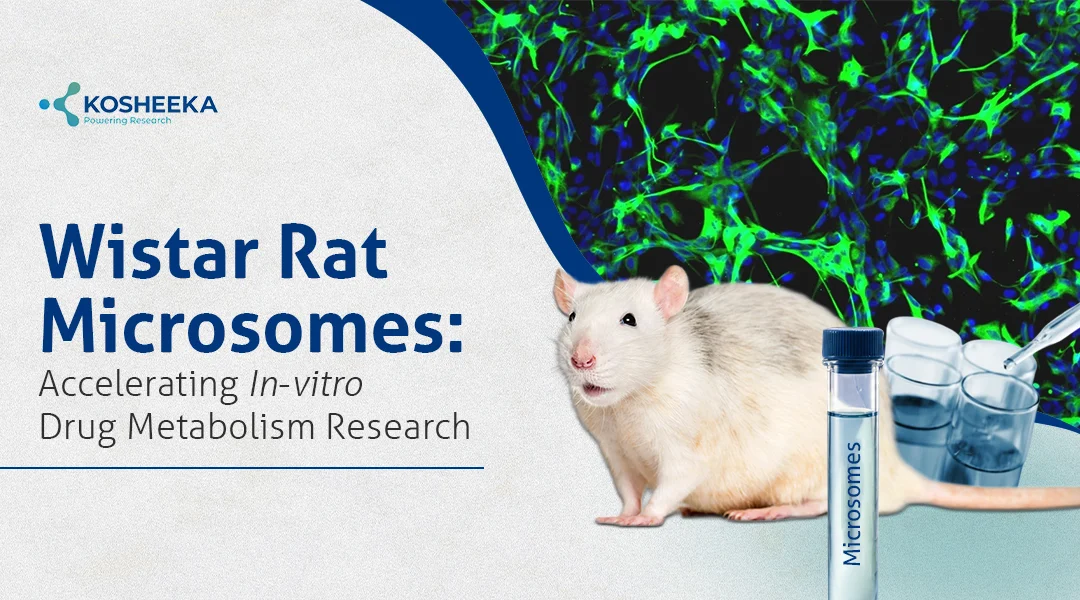
Wistar rat liver microsomes play a pivotal role in drug metabolism research and serve as rich sources of drug-metabolizing enzymes (CYP450). They serve as a reliable model for evaluating enzymatic activities, metabolic stability, toxicity profiling, and safety regulation of novel compounds. The current article explores the role of Wistar rat microsomes in preclinical studies.
Why Do Drug Metabolism Studies Matter?
Drug metabolism inside the body involves complex biotransformation. The molecules undergoes structural modification by the action of various enzymes. Researchers conduct drug metabolism studies for optimization of the lead compounds, determine their PK/PD properties, or identify new entities based on their active metabolites. The study unveils how drugs are absorbed, metabolized, and eliminated from the body. This enables optimization of suitable drug candidates, determines appropriate dosing strategies, and identifies specific safety concerns.
To generate these insights, researchers rely on in-vitro models that can closely mimic the human physiological process. Liver microsomes are among the most widely used tools that are isolated from the endoplasmic reticulum (ER) of the liver cells. These molecules are enriched with enzymes CYP450 and UDP-glucuronyltransferases (UGT) actively involved in drug metabolism. Wistar Rat Microsomes are widely used to investigate Phase I metabolism, prediction of metabolic clearance, metabolite identification, and supporting ADME studies. They serve as indispensable resources for scientists in modern drug discovery.
What Are Wistar Rat Liver Microsomes?
Wistar rat liver microsomes are subcellular membrane vesicles procured from rat liver tissue. Microsomes in cells are not naturally occurring organelles. These tiny vesicles appears as ER fragments during the tissue homogenization. The isolation of Wistar microsomes involves a multi-step process including:
- Homogenization of freshly collected Wistar rat liver in a controlled environment
- Homogenate undergoes a series of centrifugations for the removal of cellular debris, mitochondria, nuclei, and other organelles
- Supernatant is ultracentrifuge
- Collection of microsomal fractions
- Liver microsomes resuspension in storage buffer
- Characterization of microsomes (protein concentration, enzymatic activities) The fractions stored at -80 °C or in a flash fridge in liquid nitrogen
Liver microsomes consist of various enzymes involved in Phase I and Phase II metabolism. These enzymes have active involvement in metabolic pathways, intrinsic clearance, drug metabolite formation, etc. The enzymes include:
- cytochrome P450 (CYP450)
- flavin-containing monooxygenases (FMOs)
- uridine diphosphate-glucuronosyltransferases (UGTs)
- Esterases
- epoxide hydrolases
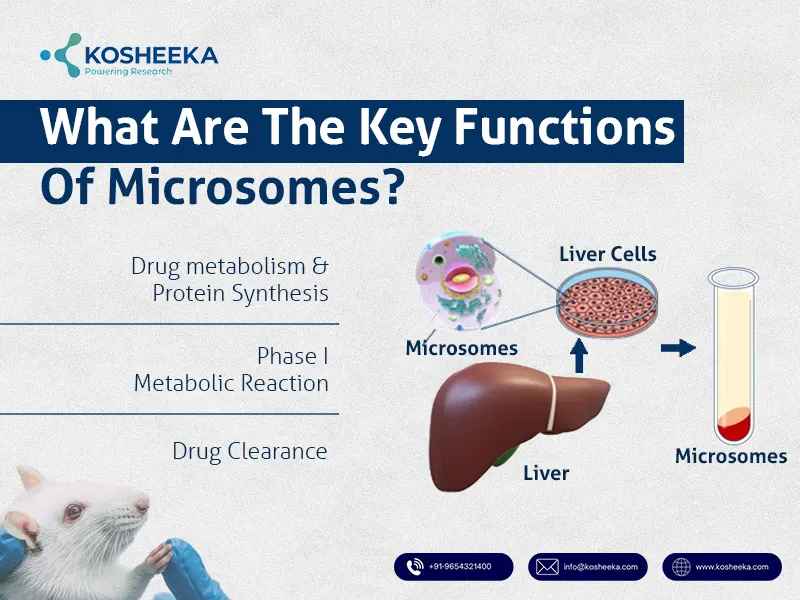
What Are The Key Functions of Microsomes?
Liver Microsomes act as vesicle-like artifacts developed during laboratory fractionalization. They act as miniature models for biomedical and pharmacological research as they retain the membrane structure and enzymatic activities of the ER. Microsome function includes:
Cytochrome P450 (CYP450)
- Oxidation and reduction of the lipid-soluble compounds
- Its specific isoforms handle distinct actions, e.g: CYP3A4 (metabolizes >50% of the drugs); CYP2D6 (antidepressants, beta blockers), CYP2C9/ CYP2C19 (warfarin, clopidogrel); CYP1A2 (caffiene, theophylline)
Phase I Metabolic Reactions
- Oxidation via the process of hydrooxylation or dealkylation of the substrate. Requires NADPH and oxygen
- Reduction involves the addition of hydrogen and the removal of oxygen
- Hydrolysis cleaves ester or amide bonds
Drug Clearance and Metabolite Formation
- Determination of drug clearance by marking depletion rate, intrinsic clearance
- Metabolic profiling of Phase I and Phase II compounds [1]
Why Wistar Rat Microsomes are Used?
Wistar Rat Microsomes Serve as a Cornerstone in Preclinical Drug Development Research. The Key Reasons Include:
- High Reproducibility and Consistency: Wistar microsomes prepared under standardized controlled conditions exhibit high reproducibility. They carried intact enzymatic activities with consistent drug-metabolizing enzymes (CYP450 family). It shows minimal experimental variability.
- Pharmaceutical Profiling: The availability of numerous reference datasets, such as enzymatic activities, metabolic pathways, intrinsic clearance, or metabolite formation, provides ease in pharmaceutical profiling. The availability of the dataset lays a strong foundation for the comparison of the novel drug candidates. It enables unveiling their metabolic behaviour
- Early Drug Screening: Rapid evaluation of metabolic stability, estimation of hepatic clearance, and enzyme-mediated clearance assessment. Enable researchers to sort unsuitable drug candidates at an early stage
- Cost-Effectiveness: Wistar rats have a short lifespan and smaller body weight. It reduces husbandry cost, makes handling easier, and enables faster testing. The quantity of the novel drug candidate is also less [2]
What Are The Applications of Wistar Rat Microsomes In Drug Metabolism Studies?
Wistar Liver Microsomes Have a Wide Range of Applications, Including:
- Determination of the metabolic stability of a novel drug candidate
- CYP450 enzyme phenotyping
- Assessing drug–drug interaction
- Identification of Metabolite
- Prediction of drug-like molecule intrinsic clearance
- Determination of Absorption, Distribution, Metabolism, Excretion, Toxicity (ADMET) profiling
- Safety evaluation of the pharmaceutical candidates
Comparing Wistar Rat Microsomes vs. Human Liver Microsomes
| Features | Wister Microsomes | Human Liver Microsomes |
| Source | Wister Rat | Human Liver |
| Use | Preclinical drug discovery | Predicting human metabolism |
| CYP450 Profile | Rat specific isoforms, shares some similarities with human | Human specific isoforms, closely reflects clinical metabolism |
| Metabolic Stability | Rapid screening of drug candidates | Confirms metabolic stability in human |
| Availability | Easy, high batch consistency | Depends on donor tissue, high donor variability |
| Experimental Reproducibility | High | Low, depend on factors like age, metabolic health, genetics, etc |
| Cost | Cost-effective for large-scale screening | Relatively expensive |
| Advantages | Economical, well-characterized, high through-put screening | Clinically relevant model, close prediction of human metabolism |
| Limitations | Species specific metabolic differences | Limited availability, higher cost, greater inter-donor variability |
What Factors Influence Microsomal Assay Outcomes?
- Microsomal protein concentration
- Cofactor systems (NADPH)
- Incubation time and temperature
- Substrate concentration
- Experimental controls
- Data interpretation considerations
How To Gain A Reliable Research Outcome?
Researchers Must Undertake Certain Key Considerations To Ensure Reliable Outcomes. This Includes:
- Choose high-quality Wistar liver microsomes
- Intact CYP activities
- Intact protein concentration
- Maintained batch-to-batch consistency
- Adequate storage, quality check, and handling
*Kosheeka, India, is among the leading manufacturers of Wister rat microsomes for research purposes. The microsomes are isolated with utmost care by following standardized protocol. The products undergoes stringent quality checks. The product comes with a Certificate of Authentication (CoA).
Conclusion
Wistar rat liver microsomes serves as gold standard models in in-vitro animal-based studies. It is widely used for screening drug-like compounds (ADMET profiling). They enable reproducible outcomes, boost preclinical decision-making, and reduce late-stage drug failure incidences. It is crucial to procure high-quality Wistar microsomes for gaining reliable experimental outcomes.
References
- Wilcock J, Ward L. Drug metabolism assessment: liver microsomes. InThe ADME Encyclopedia: A Comprehensive Guide on Biopharmacy and Pharmacokinetics 2022 Jun 15 (pp. 379-387). Cham: Springer International Publishing.
- Gajula SN, Vora SA, Dikundwar AG, Sonti R. In vitro drug metabolism studies using human liver microsomes. InDosage Forms-Innovation and Future Perspectives 2022 Oct 20. IntechOpen.
FAQ’s
Q- Why Are Wistar Rat Microsomes used in Drug Metabolism Studies?
Wistar rat microsomes consist of CYP450 and UGT enzymes. These enzymes are actively involved in drug metabolism. It acts as an effective in-vitro model for evaluating metabolic stability, intrinsic clearance, and drug metabolite formation. The Wistar model serves as a reliable option for gathering preclinical data in drug metabolism studies.
Q- What is the Primary Function of Liver Microsomes in Pharmaceutical Research?
Liver microsomes are artificially formed during homogenization of the ER (ultracentrifugation). They are the artifacts. The outer membrane and enzymes concentration remain intact in microsomes. This makes it suitable for pharmaceutical research.
Q- How do Wistar Rat Microsomes Differ from Human Liver Microsomes?
Wistar rat microsomes consist of rat-specific isoforms of CYP enzymes, while human liver microsomes closely resemble human metabolic pathways. Wistar microsomes are suitable for screening and developing preclinical data, while human microsomes enable obtaining a close clinical outcome.
Q- Can Wistar Liver Microsomes used for Drug–Drug Interactions and Metabolic Stability Prediction?
Yes, Wistar liver microsomes are suitable for preclinical prediction of drug-drug interaction and metabolic stability.