
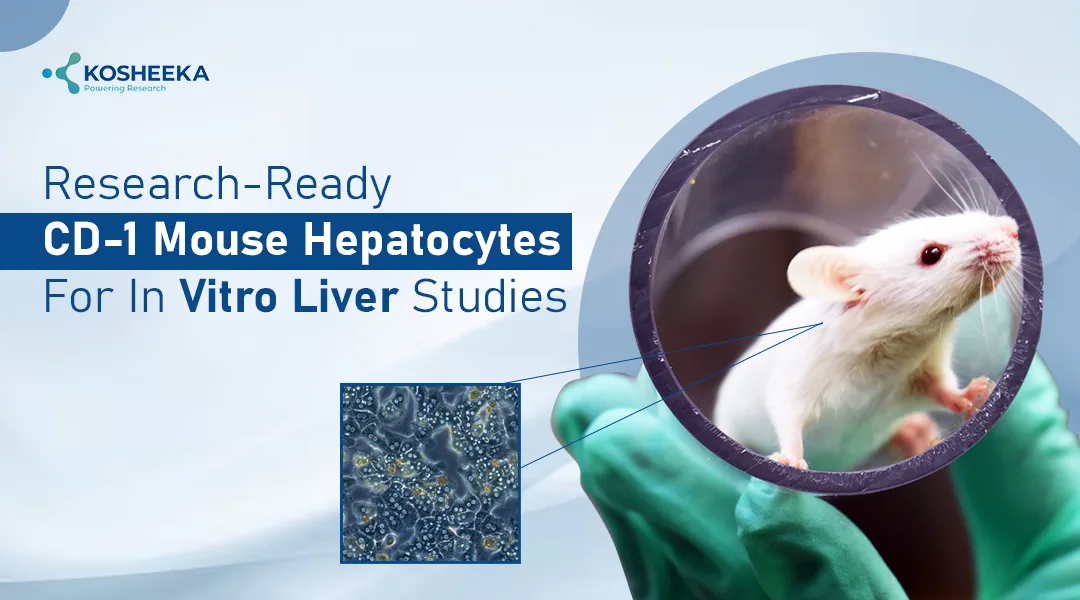
Liver research deceptively poses a simple question: How clearly does the research model reflect real liver physiology and function? The primary hepatocyte cells represent a valuable in vitro model that closely reflects liver physiology. Hepatocytes are major liver cells that are involved in various bodily functions, including metabolism, biotransformation, nutrient processing, lipid metabolism, and other cellular responses to external compounds.
Researchers widely rely on CD-1 Mouse Hepatocytes for various biomedical research applications, such as unveiling liver function, liver disease modelling and drug discovery. In comparison with continuously proliferating hepatic cell lines, primary hepatocyte cells closely represent differentiated liver cell biology. However, the outcome widely depends on isolation quality, viability, culture conditions, and experimental handling. Understanding how CD-1 mouse hepatocyte isolation is performed, what defines a suitable primary hepatocyte preparation, and how cells are maintained in CD-1 mouse hepatocyte cell culture aids researchers in making better-informed model-selection decisions. The current article explores key characteristics of CD-1 mouse primary hepatocytes, their research application, and scientific rationale for using primary hepatocytes from CD-1 mice in liver-focused studies.
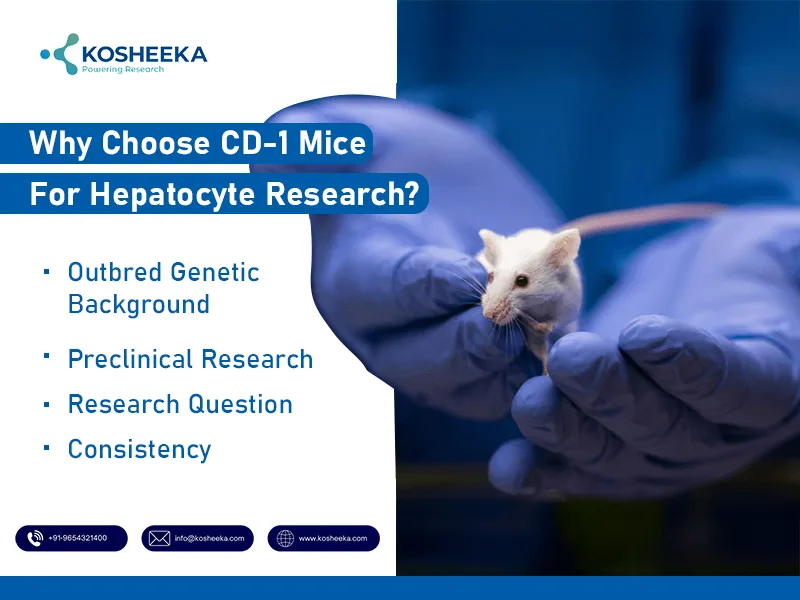
Why Choose CD-1 Mice for Hepatocyte Research?
The choice of the relevant research model is crucial for adequate interpretation of the cellular responses. CD-1 mice are outbred strains that are useful for researchers with research questions considering genetic variability. The key reasons for choosing CD-1 mice include:
- Outbred Genetic Background: CD-1 mice possess greater genetic diversity. They enable a broader biological response range that enables studying variability in hepatic responses
- Preclinical Research: Primary hepatocytes from CD-1 mice enable researchers to explore the differences between animals and their effect on compound metabolism, toxicity, and cellular responses
- Research Question: The selection of the CD-1 mouse primary hepatocytes depends on the core research question. Practically, there is no universally preferred research model for hepatocyte studies. The particle selection depends on the research objectives, metabolic pathway interest, biological variability, downstream assay, etc.
- Consistency: While working with primary hepatocytes, there are certain factors that must be considered. The factors that influence experimental outcome consistency include animal age, gender, health status, nutritional intake, cell variability, culture conditions, etc. These variations influence the experimental outcome.
How are CD-1 Mouse Hepatocytes Isolated?
CD-1 Mouse Hepatocyte Isolation Follows a Multi-Stage Procedure. This Includes:
- Anesthesia and Cannulation: Anesthetize the CD-1 mouse and cannulate
- Perfusion I: Isolate the mouse liver, wash with warm calcium-free buffer containing an anticoagulant (EGTA) to clear blood clots and disrupt cell-to-cell communication
- Perfusion II: Enzymatic digestion using collagenase. This step breaks down the connective tissue. This aids in isolation of the single cells
- Mechanical Dissociation: Tease the cells gently to soften the liver lobes in sterile buffer
- Filtration: Filter the cells through a 70-100 µm nylon mesh. This removes the cellular chunks and debris
- Centrifugation: Centrifuge the cells at low speed. The cell pellet consists of primary hepatocyte cells
- Cell Viability: Check cell viability with the help of the trypan blue assay under a microscope
- Cell Seeding: Mix viable cells in complete medium. Seed an adequate cell volume in the culture flask and incubate in a CO2 incubator at 37°C, with 5% CO2 and relative humidity
- Morphology: At regular time intervals, monitor the cell morphology under a phase-contrast microscope. At 80-85% confluency, the cells are used for the desired experimentation
*NOTE: Determination of the cell source, isolation procedure, maintenance of controlled laboratory conditions, etc., are all well documented. It is crucial to maintain quality-control parameters beginning from procurement
How are CD-1 Mouse Hepatocyte Cells Maintained?
CD-1 Mouse Hepatocyte Cell Culture involves maintaining cell viability, stability, and functional relevance in the culture. Primary hepatocytes are sensitive to their environment and require careful handling to obtain reliable experimental outcomes. The key care in culture involves:
- Efficient Cell Attachment: Choose a suitable cell culture flask/plate with a coated surface. Handle the healthy hepatocyte monolayer with care
- Culture Environment: A controlled culture environment and using a well-suited culture medium are crucial to support cell survival and hepatic function
- Maintain Morphology: Healthy hepatocytes retain their polygonal morphology. Changes in cell shape, detachment or loss of cellular integrity potentially indicate declining cell quality.
- Maintenance of Hepatic Functions: The objective is not simply to keep cells alive but to preserve relevant functions such as metabolic activity, enzyme expression and transporter activity, depending on the study.
- Consistent Culture Conditions: Seeding density, medium changes, handling and culture duration can influence hepatocyte stability and should be carefully controlled for reproducible results.
*NOTE: The isolation of primary hepatocyte cells from the mouse can be a tedious task when planning the experiment. Kosheeka, India, is among the leading manufacturers and suppliers of well-characterized CD-1 mouse hepatocyte cells for experimental use. The product comes with a Certificate of Authentication (CoA)
What are the Key Research Applications of CD-1 Mouse Primary Hepatocytes?
CD-1 Mouse Hepatocyte Cells have a Wide Range of Laboratory Applications, Including:
- Drug metabolism and pharmacokinetic research
- Determination of hepatic toxicity and safety assessment
- Role of CYP450 and enzyme activity studies
- Liver disease modelling and hepatocellular biology
- Metabolic studies involving nutrient processing, lipid metabolism, protein synthesis, etc.
- Determine cellular responses to compounds and biological stimuli [1]
What are the Differences Between CD-1 Mouse Hepatocytes vs. Hepatic Cell Lines?
| Features | CD-1 Mouse Primary Hepatocytes | Immortalized Hepatic Cell Lines |
| Physiological Relevance | Higher | Might vary |
| Native Function | Preserved | Often altered |
| Metabolic Competence | More representative | Potentially differ based on genetic variation |
| Lifespan | Limited | Longer, multiple passage possible |
| Experimentation | Primary liver biology, metabolic toxicity | High-throughput studies, drug candidate screening |
What are Key Considerations While Procuring Primary Hepatocyte Cells?
- CD-1 mouse primary hepatocyte selection requires key considerations, including:
- Check cell viability and expected yield as desired for the experimental design
- Determine healthy cell morphology and cellular integrity
- Inspect relevant hepatic function, including metabolic activity, transporter activity, or enzyme expression
- Inspect species, strain, age, gender, health status, and all other documented information
- Cross-check quality control documentation (viability, sterility, QC parameters, characterization, suitable medium, etc.)
*Kosheeka, India carefully isolates, maintains, and stores primary cells and supplies for research purposes
Conclusion
The choice of the right hepatocyte model for liver research is crucial to address the proposed research question. In this context, CD-1 mouse hepatocytes serve as vital in vitro models for various metabolic and liver research. It is crucial to procure well-characterised, superior-quality primary hepatocyte cells to gain authentic and reproducible outcomes.
References
- Yang L, Guo X, Mao X, Jia X, Zhou Y, Hu Y, Sun L, Guo J, Xiao H, Zhang Z. Hepatic toxicity of fluorene-9-bisphenol (BHPF) on CD-1 mice. Ecotoxicology and Environmental Safety. 2021 Aug 1;219:112298.
FAQ’s
Q- What are CD-1 mouse hepatocytes?
CD-1 mouse hepatocytes are primary liver cells isolated from CD-1 mice. They retain several characteristics and functions of hepatocytes in the liver, making them useful for studies involving metabolism, toxicity, liver biology and drug research.
Q- Why are CD-1 mouse hepatocytes used in research?
They provide a primary-cell model for studying liver-specific functions in a more physiologically relevant setting than many immortalized cell lines. Researchers can use them to investigate drug metabolism, enzyme activity, hepatotoxicity and cellular responses to different compounds.
Q- What factors are important when selecting CD-1 mouse hepatocytes?
Cell viability, yield, morphology, functional characteristics and consistency between preparations are important considerations. The cells should also be compatible with the intended culture conditions and downstream assay.
Q- How are CD-1 mouse hepatocytes maintained in cell culture?
Following isolation, hepatocytes require suitable culture conditions that support attachment, viability and maintenance of liver-specific functions. Media composition, extracellular environment, handling and culture duration can all influence their performance.