

Introduction
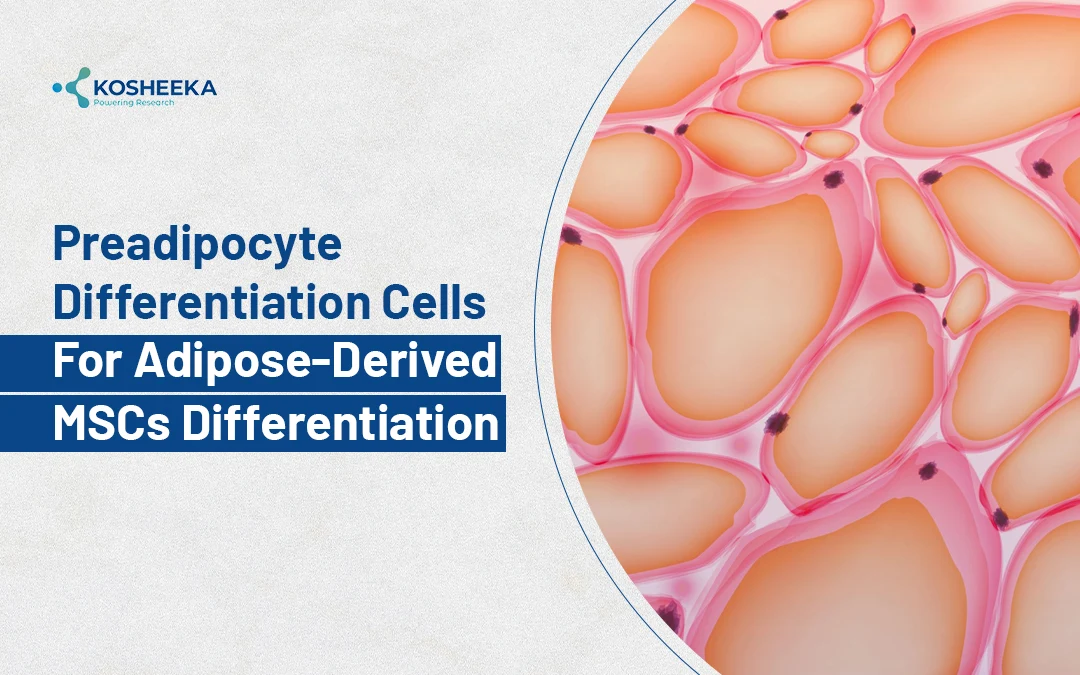
Preadipocyte differentiation or ‘adipogenesis’ is an active biological process that transforms precursor cells (preadipocytes) into mature adipocytes. In normal biology, the process plays a central role in tissue repair mechanisms and energy balance.
With emerging research, the cells have transformed their usage from classic fat mechanisms studies to regenerative medicine. Scientists are considering adipocytes as a key model in developing cell-based regenerative therapies. Unlocking the key mechanism of preadipocyte differentiation and adipocyte culture enables establishing new possibilities in regenerative research.
Understanding Preadipocytes and Adipocytes
In higher animals, adipocytes (triglycerides stored in fat cells) act as a key reservoir for energy. Historically, adipocytes were thought to have evolved as fat-storing molecules. They allowed organisms to survive during energy-deprivation conditions. In modern times, fat accumulation in the body is related to junk food intake and sedentary lifestyles.
Origin
- Preadipocytes are progenitor cells. They are derived from mesenchymal stem cells.
- Preadipocytes undergo differentiation and transform into mature adipocytes.
Structure
- Morphologically, preadipocytes are fibroblasts that can accumulate lipid droplets. These cells are spindle-shaped. The cells have rapid differentiation capability.
- Adipocytes are mature cells that are larger and spherically shaped. These cells become specialised for storing triglycerides. Two subtypes characterise adipocytes: i) White fat cells (unilocular or single lipid vacuole); ii) Brown fat (Multilocular or small fat droplets)
Metabolism
- Adipocyte metabolism plays a pivotal role in the whole-body mechanism.
- Adipocytes secrete various growth factors and adipokines that support cellular communication and tissue repair
- They support the adipose-derived stem cells microenvironment that influences cellular proliferation and differentiation
- The mechanism of lipid metabolism and adipocyte-derived signals enables new vascularisation and tissue remodelling
- In in vitro research, preadipocytes and adipocytes have two fates: i) disease remodelling (Obesity, metabolic disease); ii) soft tissue regeneration
- Adipose-derived MSCs secrete extracellular vesicles like exosomes that aid in immunomodulation and tissue regeneration
Preadipocyte Differentiation: Cellular and Molecular Mechanism
Preadipocyte differentiation is a multistage process. This includes:
- Commitment Stage: MSCs with precise stimulation commit to the adipocyte lineage. It forms preadipocytes and triggers activation of adipogenic genes
- Clonal Expansion: Preadipocytes re-enter the mitotic cell cycle. They undergo limited differentiation
- Terminal Differentiation: Cells skip the cell cycle phase, accumulate lipid droplets and transform into metabolically active adipocytes
- Key Regulators: Transcription factors (PPARγ & C/EBP) are involved in gene expression for adipocyte maturity
- Regulatory Hormone: Glucocorticoids and insulin support adipocyte maturity; they influence adipogenic pathways
- Signalling Molecules: cAMP supports differentiation events, while the Wnt signalling pathway regulates or inhibits adipogenesis
In-vitro Adipocyte Differentiation in Regenerative Research
In regenerative research, Adipocyte differentiation protocols are sub-categorised into three steps. This includes:
Preadipocytes to Adipocytes
- Preadipocytes are precursors that differentiate into adipocytes in controlled laboratory conditions.
- Human white preadipocytes are cultured in the presence of adipogenic stimuli.
- Lipid droplet accumulation indicates transition towards mature adipocytes.
Adipocyte Differentiation
- Adipocyte differentiation induced by adipogenic cocktail (IBMX, insulin, dexamethasone)
- Activates PPARγ drivers
- Cells differentiate within 7 to 14 days
- Cells are monitored at regular time intervals
- Complete culture medium: adipocyte differentiation medium + PriGrow IV supplement + 10% FBS + 1% Pen-Step antibiotic
- Cell incubation condition: CO2 incubator, 5% CO2 supply, 37°C, relative humidity
- Cell culture medium is replaced at an adequate time interval.
MSCs Isolation
- Adipose-derived MSCs are multilineage cells that differentiate into the adipogenic lineage with specific stimulation.
- MSCs-derived adipocytes are a vital tool in regenerative research
- MSCs are directly isolated from the adipocyte tissue (direct process) or transformed from mature adipocytes (indirect)
- Direct isolation: Tissue sample collection, washing and preparation, enzymatic digestion, centrifugation, cell pellet procurement, cell seeding and culture
- Indirect isolation: Mature adipocytes are dedifferentiated into fibroblast-like (DFAT) cells. Matured adipocytes are centrifuged in a completely media-filled Falcon. The cells attach to the top; the lipid droplets are gradually lost. The cells transform into spindle-shaped cells
- DFAT cells have multipotency. They can differentiate into adipogenic, chondrogenic, and osteogenic lineages
- MSCs characterization markers confirm appropriate cell isolation. Positive markers (CD73⁺, CD90⁺, CD105⁺); Negative Markers (CD45⁻)
Characterisation and Validation of Differentiated Adipocytes
The characterisation and validation of differentiated adipocytes involves:
Morphological Assessment
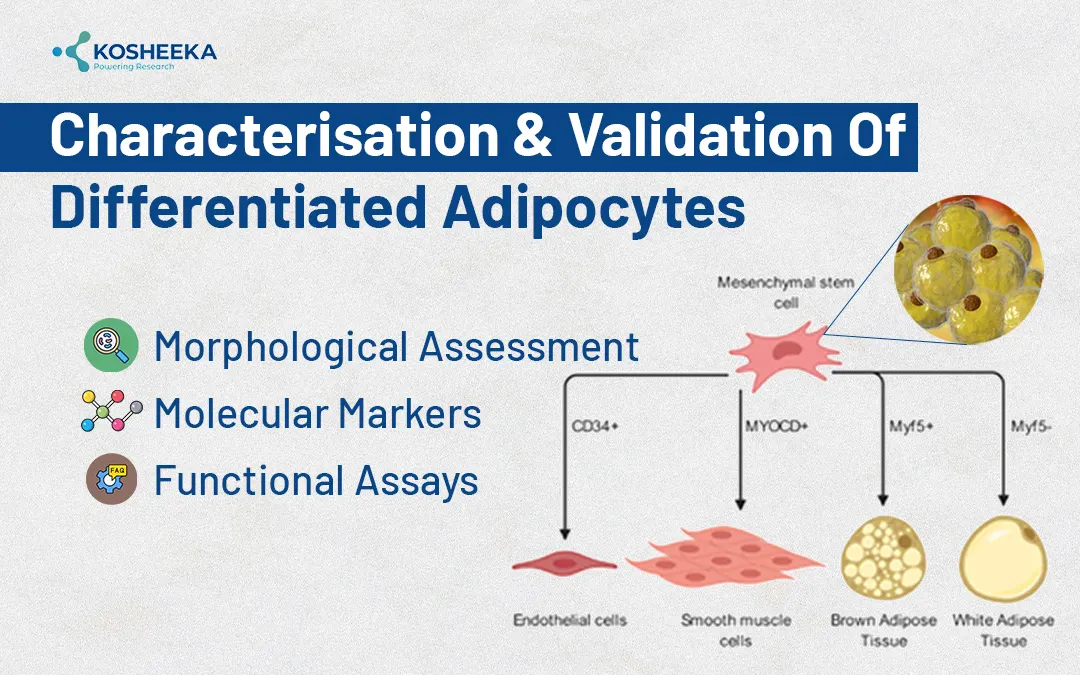
- Lipid droplet formation involving detection of triglyceride accumulation. Dyes used for identification include Oil red, Nile red, etc
- Phase-contrast microscopy indicates a shift from fibroblast-like to round shapes and visualisation
Molecular Markers
- Molecular marker identification involves techniques like qRT-PCR and Western blot
- Transcriptional markers: PPARγ & C/EBP
- Mature marker: FABP4, Adiponectin, GLUT4, Leptin
Functional Assays
- Lipolytic activity determination
- Glucose uptake
- Adipokine secretion
Applications in Regenerative Research
Preadipocytes and adipocytes application in regenerative research is extensive. This includes:
- Adipose Tissue Engineering: Preadipocytes used in 3D scaffold formation. It aids in the creation of vascularized adipose tissue. The application includes reconstructing soft tissue defects.
- Musculoskeletal Regeneration: Adipose-derived MSCs are widely used for bone and cartilage repair. They are multilineage and can differentiate into osteoblasts. Diseases include osteoarthritis
- Wound Healing & Fibrosis: Preadipocytes and adipose-derived MSCs induce scar repair mechanisms and dermal regeneration. They release various growth factors and cytokines. They reduce the effects of fibrosis and support angiogenesis.
- Metabolic Disease: Adipocytes are key models in understanding lipid metabolism and its associated diseases. This includes diabetes or obesity. Adipose-derived MSCs have undergone clinical trials for diabetes management.
- Cosmetic Surgery: Dermatologists are widely favouring autologous fat grafting use for facial rejuvenation.
*Kosheeka, India is a leading research laboratory that isolates, maintains, and supplies clinical-grade adipocytes and stem cells for research purposes.
Recent Breakthroughs and Emerging Trends
- Development of 3D adipocyte culture and organoids
- Evolving role of cell-free technologies, e.g., exosomes
- Development of personalised medicine and regenerative research
Challenges and Limitations in Adipocyte Culture
- Maintaining mature adipocytes is complex. The adipocytes are large and buoyant. They are fragile and have limited lifespan
- Donor-dependent heterogeneity
- Preadipocytes might not differentiate into unilocular cells, might differentiate into multilocular cells. The functionality varies in culture, producing variable results.
Conclusion
Preadipocytes and adipocytes are critical models in biomedical research and regenerative medicine. Preadipocytes differentiate into mature adipocyte cells that are abundant in higher animals. Adipose-derived MSCs have wide range of application in regenerative medicine. The research field involve metabolic diseases (diabetes and obesity).
References
- Huang G, Xia B, Dai Z, Yang R, Chen R, Yang H. Comparative study of dedifferentiated fat cell and adipose‐derived stromal cell sheets for periodontal tissue regeneration: In vivo and in vitro evidence. Journal of Clinical Periodontology. 2022 Dec;49(12):1289-303.
- Bayulgen DS, Veronese S, Sbarbati A. Dedifferentiation of Mature Adipocytes and Their Future Potential for Regenerative Medicine Applications. Biomedicines. 2026 Jan 2;14(1):95.
FAQ’s
Q- What is Preadipocyte Differentiation?
Preadipocytes are fibroblast-like precursor cells that differentiate into adipocytes (adipogenesis).
Q- How Long Does Adipocyte Differentiation Take in Vitro?
In in vitro culture, adipocyte differentiation typically occurs between 12 and 14 days. With changing cell condition, cell culture medium is replaced.
Q- What are the Key Markers of Mature Adipocytes?
Adipocyte-specific markers include FABP4, Perilipin-1, Adiponectin, PPARγ. The presence of these markers indicates mature adipocyte cells.
Q- How Does Adipocyte Culture Contribute to Regenerative Medicine?
Adipose-derived MSCs are widely studied in regenerative research. These cells are multilineage and can differentiate into adipogenic, chondrogenic, and osteogenic.



The extensive focus on regenerative medicine and the specific utility of diverse primary cell sources, such as adipose-derived stem cells and retinocytes, truly highlights the complexity of modern tissue engineering. It is fascinating how different subcellular fractions and exosomes are bridging the gap between basic research and practical applications in disease modeling. This breadth of resources clearly demonstrates why precise cell selection is so critical for advancing therapies in areas like cancer research and stem cell therapies.
Thankyou for your thoughtful comment! We’re glad you found the discussion informative. You’ve highlighted an important aspect of regenerative medicine, especially the role of diverse primary cell sources, exosomes, and precise cell selection in advancing tissue engineering and disease modeling research. We appreciate you taking the time to share your perspective and support our work! We also supply a variety of primary and secondary cells for research purposes, so feel free to contact us if required.Please contact us via WhatsApp or call us at +91-9654321400, or mail us on info@advancells.com for more information. We’re here to support you every step of the way.
The discussion on preadipocyte differentiation is really insightful, especially in the context of regenerative research. It would be interesting to explore further how different subcellular fractions might influence differentiation outcomes and cell behavior. Understanding these interactions could open up new avenues for tissue engineering and disease modeling.
Thank you for your thoughtful comment! We’re glad you found our article informative. It’s definitely an exciting area with strong potential for tissue engineering and disease modeling research. We appreciate you taking the time to share your perspective. Keep reading our weekly articles for more insights into regenerative medicine and cell biology research! Website:https://www.kosheeka.com/