

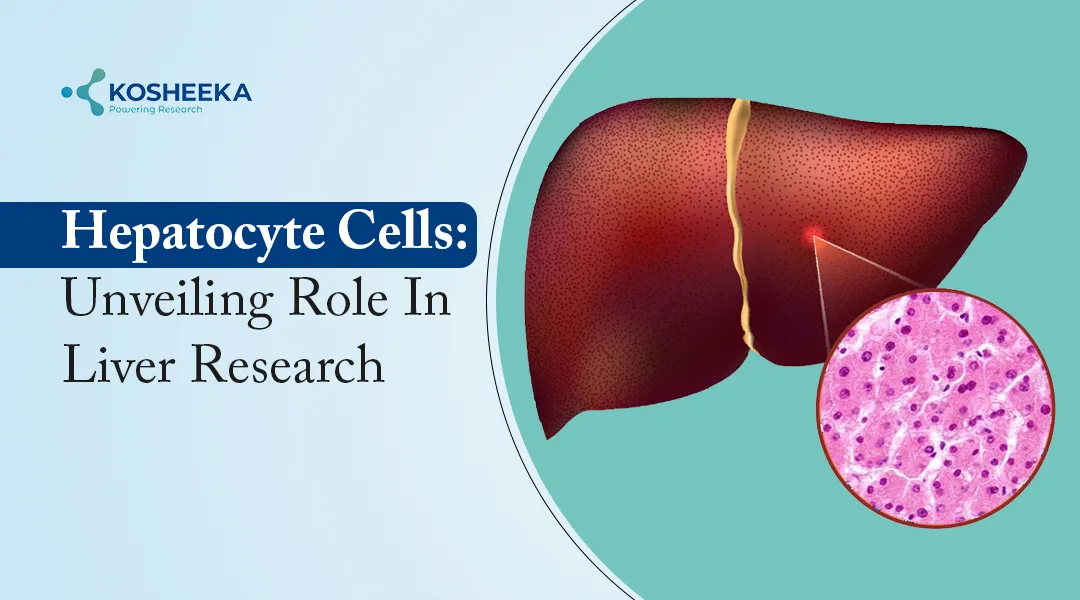
Hepatocyte cells are the primary functional liver cells. They make up >70% of liver mass. The key functions of hepatocytes include metabolism, bioactive molecule production, and detoxification. Liver Parenchymal Cells act as primary cells that regulate carbohydrate, lipid, and protein metabolism. Beyond their physiological function, hepatocytes serve as a cornerstone in modern biomedical research. Researchers widely use these cells to investigate healthy liver function, disease stage, molecular mechanisms, drug metabolism, hepatotoxicity, and regenerative science.
With growing demand for predictive preclinical models, hepatocyte-based platforms serve as excellent choices for drug discovery, precision medicine, and regenerative medicine. The current article explores hepatocytes, their function, histology, and applications in biomedical and regenerative research.
Hepatocyte Cells: Structure, Origin, and Biological Characteristics
Hepatocytes are the primary cells of the parenchymal tissue in the liver and display multifaceted functions. These cells undertake functions including carbohydrate and lipid metabolism, albumin secretion, fibronectin regulation, detoxification, secretion, etc. Hepatocytes serve as a vital experimental model for researchers to understand drug metabolism and undertake drug safety assessment.
The Key Biological Features of Hepatocyte Cells Include:
- Polygonal epithelial cells with intact cell membrane
- Consists of one or two center-placed nuclei surrounded by cytoplasm and rich cell organelles
- Facilitates protein and lipid synthesis and secretion
- Have a lateral surface that faces neighbouring hepatocytes and forms anastomosing plates
- Sinusoid surface faces vascular sinusoids (emerges from peripheral branches of the portal vein & hepatic artery)
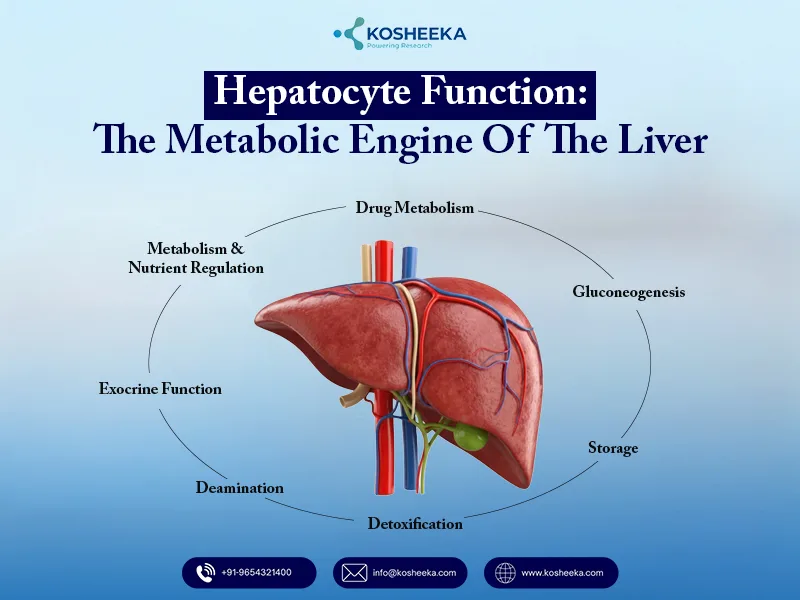
Hepatocyte Function: The Metabolic Engine of the Liver
The Key Function of Hepatocytes:
- Metabolism & Nutrient Regulation: Break down nutrients, regulation of blood sugar, conversion of glucose and glycogen, lipid and fat metabolism
- Drug Metabolism: Phase I reaction increases polarity of the water-soluble compounds via oxidation, reduction or hydrolysis; Phase II reaction creates fewer byproducts via transfer reaction and conjugation
- Exocrine Function: Secretion of the bile and its components
- Gluconeogenesis: Converts amino acids into glucose
- Deamination: Synthesizes urea from amino acids
- Detoxification: Breakdown and conjugation of ingested toxins, alcohol, and drugs
- Storage: Glycogen, lipids, key vitamins (A, D, B12), Minerals (iron, copper)
Hepatocytes Histology: Understanding Liver Microarchitecture
Histologically, the liver is a highly organised organ consisting of hepatocytes, cholangiocytes, Kupffer cells, stellate cells and endothelial cells. Hepatocyte histology accounts for:
- Organised as plates 1- 2 cells thick
- Polygonal shaped with centrally localised nuclei (mono- or multinucleated), abundant endoplasmic reticulum, fine basophilic granules
- Hepatic lobule forms a hexagonal shape, consisting of a central vein at its core and portal triads positioned at each corner
- Blood flows in the direction of the portal vein to the lobule, creating metabolic gradients enabling specialized functions like gluconeogenesis, ammonia detoxification, and xenobiotic metabolism
- Hepatic cords are separated via hepatic sinusoids that enable efficient exchange (oxygen, metabolites, nutrients, signalling molecules)
- Hepatocyte cells maintain a high degree of polarity that coordinates with blood-borne metabolism and bile secretion
- Dysfunction of polarized structure leads to various diseases including cholestatic disorder, hepatocellular carcinoma, or fibrosis
Hepatocyte Cell Culture Models for Biomedical Research
Primary human hepatocytes serve as the gold standard model in in vitro research. The model shares high predictive value in drug metabolism and toxicity studies. In biomedical research, scientists exploit the Hepatocyte Cell Culture model to develop early insights into drug behaviour, likelihood of drug candidates, metabolism behaviour, elimination route, etc. This enables researchers to predict the risk of adverse effects before human trials.
In hepatocyte cell culture, biomarker identification plays a vital role in in vitro research.
Table: Hepatocyte Biomarkers
| Biomarker | Significance in Research |
| Albumin (ALB) | Indication of matured hepatocyte cells and active protein synthesis |
| Hepatocyte Nuclear Factor 4 alpha (HNF4α) | Regulates transcription factor, hepatocyte differentiation, liver-specific gene expression |
| Cytokeratin 18 (CK18) | Structural protein, expressed in mature hepatocytes |
| Asialoglycoprotein Receptor 1 (ASGR1) | Highly specific surface marker, identification of functional hepatocytes |
| Cytochrome P450 (CYP450) | Reflects hepatic drug metabolism capacity, pharmacological and toxicology studies |
Hepatocytes used for research purposes must undergo stringent quality checks for reliable and authentic outcomes. Kosheeka, India, isolates hepatocyte cells under a stringent laboratory protocol and undergoes characterization. This ensures the highest cell quality and performance in drug development and regenerative studies. Kosheeka is a leading supplier of high-quality hepatocyte cells for research purposes globally.
Hepatocyte Cells in Drug Discovery and ADME Studies
Hepatocyte cells act as cumulative sites for hepatic drug metabolism. They contain the full complement of enzymes, including Phase I and Phase II. The cells are used to determine in-vitro intrinsic clearance of drug candidates. Researchers use various species-specific cryopreserved hepatocytes for understanding interspecies differences. The cells enable evaluation of thousands of drug candidates, which determine their physicochemical properties, clearance route, metabolism and elimination pathway, and predictive performance.
Determination of ADMET (Absorption, Distribution, Metabolism, Excretion and Toxicity) has core relevance in drug discovery studies. Hepatocyte cells enable researchers to unveil drug-drug interactions, pharmacokinetic evaluation, hepatotoxicity testing, and elimination routes.
*Kosheeka, India is a leading supplier of hepatocyte cells for research. The cells are isolated from distinct sources, including human, CD1 mouse, Sprague-Dawley rat (SD rat), Wistar rat, and Beagle dog.
What are the Hepatocyte Models for Liver Disease Research?
- Metabolic Dysfunction-Associated Steatotic Liver Disease (MASLD): Investigation of lipid accumulation, oxidative stress, insulin resistance, and inflammatory pathways
- Liver Fibrosis: development of the co-culture system, combination of hepatocyte cells with hepatic stellate cells. Studies involve liver fibrogenesis, ECM deposition, and liver remodeling
- Viral Hepatitis: Primary hepatocytes used for Hepatitis B and C infection, viral replication, host-pathogen interaction, cellular damage or adverse liver reaction
- Drug-Induced Liver Injury (DILI): Assessment of hepatotoxicity, identification of drug-induced cellular damage, adverse liver reactions
- Regenerative Medicine: Hepatocyte model for stem cell-derived hepatocyte research, liver organoid development, regeneration, and tissue engineering studies
- Hepatocellular Carcinoma Research: Molecular mechanisms involved in tumour progression, identification of novel compounds and generation of preclinical data
What are the Current Challenges?
- Limited availability of primary human hepatocytes
- Limited proliferation capacity or loss of zonation
- Donor-to-donor variability
- Phenotypic instability, complex in-vitro culture conditions
- High possibility of contamination in a nutrition-enriched environment
Conclusion
Hepatocytes have a pivotal role in understanding liver biology, advanced biomedical research, and regenerative medicine. This enables researchers to investigate liver disease, evaluate drug safety, advance precision medicine, and develop targeted therapies. With the evolution of cell culture techniques and the development of better predictive models, human-reliable models and next-generation liver research are possible.
FAQ’s
Q- Are Primary Hepatocytes Useful in Liver Research?
Yes, primary hepatocytes closely mimic liver physiology. The cells enable researchers to understand liver physiology, drug screening, ADMET profiling, and regenerative medicine.
Q- Is There Any Difference Between Hepatocyte Cells and Other Liver Cells?
Yes, hepatocyte cells are primary liver parenchymal cells (approximately 80% of liver mass). Other Liver cells include hepatic stellate cells, Kupffer cells, and liver sinusoidal endothelial cells.
Q- What are the Major Challenges in Hepatocyte Cell Culture?
Primary hepatocyte cell culture is subject to various challenges. These include donor availability, limited proliferation, donor variability, and the complexity of maintaining physiological conditions.
Q- How are Hepatocyte Cells used in Drug Discovery and Regenerative Medicine?
Hepatocyte cells are used for ADMET profiling, development of liver organoids, regenerative ability of hepatocytes, etc.




The emphasis on hepatocyte cells in both biomedical research and regenerative medicine highlights how versatile these cells are beyond basic liver biology. It would also be interesting to explore how advances in 3D cell culture and organoid models are improving the ability to study hepatocyte function over longer periods and better mimic human physiology.
Definitely, the development of 3D culture and organoid models enables researchers to overcome various limitations associated with cell lines and animal models. For any animal cell culture-related needs, For more information contact us via WhatsApp or call us at +91-9654321400, or mail us on info@advancells.com for more information. We’re here to support you every step of the way.