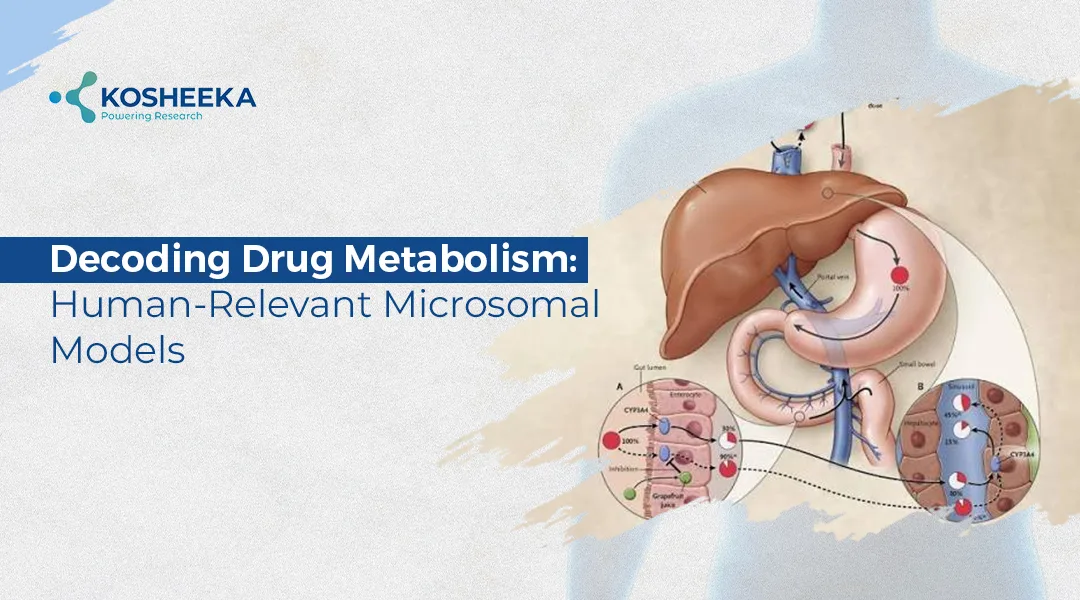
Drug development involves screening a series of potential drug candidates. Researchers explore potential drug metabolism, how the compounds break down, the metabolic pathways involved, and whether the metabolites influence safety or turn out to be toxic. Drug metabolism studies unveil the potential of the drug candidate and serve as an essential part of early drug discovery.
Human liver microsomes have become a valuable research tool for investigating these processes under controlled laboratory conditions. These are tiny molecules that are artificially derived from the endoplasmic reticulum (ER) of liver cells. These membrane vesicles retain important drug-metabolising enzymes, including cytochrome P450 (CYP) enzymes. Their activity allows researchers to examine how potential drug candidates undergo biotransformation and assess their metabolic stability before advancing to more complex studies.
Human-derived microsomal preparations are an efficient in vitro model that offers detailed insights into metabolic pathways. Investigations, including drug candidate screening, metabolic pathways, enzymatic activities, drug–drug interactions, etc., are explored. The current article unveils in-depth microsomal functions and their experimental applications. It explores the role of a Human Liver Microsomes assay, generating meaningful data for drug development.
What Are Liver Microsomes?
Human liver microsomes are subcellular membrane fractions isolated from the endoplasmic reticulum (ER) artificially from liver cells. The key characteristics include:
Origin
- Prepared from human liver homogenate through differential centrifugation
- Procured from fresh human liver sample in a controlled laboratory environment
- Normally, microsomes are not part of cell organelles; they are basically laboratory artifacts that are produced at times of homogenization and mechanical disruption
Characteristics
- Liver microsomes consist of membrane-bound Phase I enzymes
- Common Phase I enzymes include CYP isoforms, FMOs, esterases, epoxide hydrolases, or amidases
- Certain Phase II enzymes include UGTs
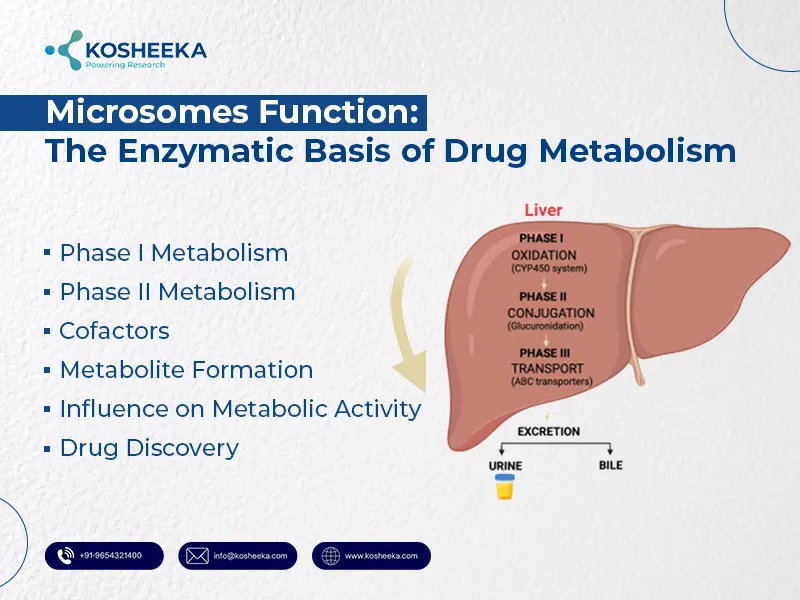
Microsomes Function: The Enzymatic Basis of Drug Metabolism
Human liver exosomes are used for various experimental purposes. The key microsomal functions include:
- Phase I Metabolism: The key enzymes, Cytochrome P450 (CYP450) isoforms, play a crucial role in Phase I reactions. The drug candidate undergoes oxidation. The reaction modifies the drug candidate for further metabolism.
- Phase II Metabolism: UDP-glucuronosyltransferases (UGTs) attach glucuronic acid (glucuronidation), which improves the compound’s water solubility. This supports the solubility of the compound and eliminates the compound from the body
- Cofactors: Certain cofactors are essential to support enzymatic reactions. NADPH is responsible for reducing equivalents through an electron-transfer system. UDP-glucuronic acid (UDPGA) is required for UGT-mediated glucuronidation
- Metabolite Formation: Drug metabolism produces metabolites that might be in an active state and contribute to toxicity. Researchers explore metabolite formation to help them understand metabolic fate
- Influence on Metabolic Activity: Enzyme abundance, genetic differences, substrate specificity, and potential interaction with other compounds influence the way a drug candidate is metabolised. The difference in enzyme activity during human liver microsome preparations affects experimental findings and experimental interpretation
- Drug Discovery: The examination of the enzymatic process enables assessing metabolic stability, ADME profiling, toxicology potential, identification of the enzymes involved in drug breakdown, investigation of potential metabolic interaction, etc.
How are Microsomes Prepared?
Human liver microsomes preparation involves a multi-step process. For isolating human liver microsomes, researchers follow:
- Liver Tissue Collection: Procure fresh human liver tissue (ethically sourced biological sample). Handle carefully to maintain the intact enzymatic profile
- Tissue Homogenization: Homogenize aseptically minced liver tissue in a suitable buffer. This step breaks open the cell membrane and exposes cell organelles
- Differential Centrifugation: Liver homogenate undergoes centrifugation at distinct steps. Initially, centrifugation removes larger cell debris or unbroken cells. Further centrifugation enables separation of smaller subcellular fractions
- Microsomal Fraction Isolation: The post-mitochondrial supernatant undergoes high-speed ultracentrifugation. This enables collection of microsomal membranes. Human liver microsomes are procured from the endoplasmic reticulum
- Washing and Resuspension: Wash and resuspend microsomal pellets in a suitable buffer. This step is crucial to avoid contamination
- Protein Quantification and Quality Assessment: Characterize the microsomal protein, relevant enzymatic activities, and establish its concentration and experimental suitability
- Storage: Adequate storage and handling in the form of aliquots is crucial to maintain its activities [1]
*NOTE: Consistent processing is crucial to maintain microsomal enzyme activity. It supports reliable, reproducible experimental outcomes in drug metabolism studies. Kosheeka, India, is a leading manufacturer and supplier of animal cell culture cells, including hepatocytes and microsomes. The products come with a Certificate of Authentication (CoA).
Human Liver Microsomes Assay: Principles and Experimental Workflow
The Human Liver Microsomes Assay involves considering various aspects, including:
- Assay Preparation: Combine the human liver microsomes with the potential drug candidate. The required medium and cofactors are incorporated
- Incubation: During experimentation, set up the substrate concentration, microsomal protein level, incubation time, and other incubation parameters (pH, temperature, relative humidity, etc.). Keep conditions within the validated linear range to obtain reliable outcome
- Metabolic Stability Assay: Track the amount or percentage of parent compound depletion over time
- Enzyme Activity Assays: Use specific probe substrates to assess the activity of selected cytochrome P450 (CYP) enzymes and understand their role in drug metabolism.
- Analytical Detection: Sophisticated analytical methods like LC–MS/MS are used. The remaining parent compound, relevant metabolites, or other compounds are analysed
- Data Analysis: Calculate the compound’s half-life and intrinsic clearance from the depletion data. Apply appropriate scaling assumptions when estimating how these results might relate to drug metabolism in the body.
- Quality Control: To ensure result reliability, consider positive control (-ve cofactors, -ve enzymatic content) along with experimental conditions.
What Factors Influence Assay Reliability, Data Interpretation and Limitations?
- Donor Variability: Human liver microsomes are pooled from different donors to maintain its concentration. However, they potentially have distinct CYP activities. This can possibly influence the metabolic outcome
- Experimental Parameters: Consideration of microsomal protein concentration, incubation time, substrate solubility, nonspecific binding, and cofactor availability. All these parameters affect the experimental outcome reliability.
- Enzyme Stability: With changes in storage conditions or mishandling, the enzymatic activities get significantly affected.
- Data Interpretation: In vitro intrinsic clearance of the metabolite provides an estimate of the metabolic activity. Researchers must carefully interpret data. They do not completely reflect the possible drug clearance in the human body
- Key Limitations: Microsomes do not completely represent cytosolic enzymes, cellular architecture, drug transporters, or enzymatic activities. fully represent cytosolic enzymes, drug transporters, cellular architecture, or enzyme induction.
- Complementary Approaches: Considering hepatocytes, S9 fractions, recombinant enzymes, etc. help in overcoming limitations with microsomal model for understanding drug metabolism
- Reproducibility: Use valid and standardized protocols, appropriate controls, and consistent experimental conditions are essential for reliable results and meaningful comparisons across studies.
Conclusion
Human liver microsomes are widely used in various biomedical research applications. Procure well-characterised human liver microsomes for reliable and reproducible experimental outcomes. Drug candidate screening is efficiently performed with a human liver microsomes assay. It is crucial to maintain aseptic and controlled laboratory conditions to gain reproducible and reliable outcomes.
References
- Wegler C, Matsson P, Krogstad V, Urdzik J, Christensen H, Andersson TB, Artursson P. Influence of proteome profiles and intracellular drug exposure on differences in CYP activity in donor-matched human liver microsomes and hepatocytes. Molecular Pharmaceutics. 2021 Apr 5;18(4):1792-805.
FAQ’s
Q- What is the primary function of human liver microsomes in drug metabolism research?
Human liver microsomes help researchers study how drug-metabolising enzymes, particularly cytochrome P450 enzymes, break down compounds. They are widely used to assess metabolic stability, identify metabolic pathways, and investigate potential drug–drug interactions.
Q- How are human liver microsomes different from whole liver cells?
Human liver microsomes are tiny membrane vesicles that are produced from ER artificially at the time of tissue processing. They help researchers study specific aspects of drug metabolism, particularly enzyme activity. In contrast, whole liver cells or hepatocytes provide a broader view because they retain their cellular structures, transport systems, and a wider range of metabolic functions.
Q- What human liver microsomes assays reveal about the drug candidate?
The human liver microsomes assay provides insights into how quickly the drug candidate is metabolised. The enzymes contribute to breakdown and whether it forms detectable metabolites. These findings help researchers evaluate metabolic stability and prioritise promising drug candidates for further investigation.
Q- What factors are considered when selecting human liver microsomes?
Choosing human liver microsomes depends on the research objective. The key considerations include product characterization, enzyme activity, protein concentration, sample quality, storage, variations between donors, availability of documentation, etc. Pooled microsomes are often suitable for studying overall metabolic patterns, while individual-donor samples help researchers understand how drug metabolism can vary from one person to another.

Author: Dr. Siuli Shaw
PhD in Biotechnology | Scientific Writer | Advancells Group
Translating cutting-edge science into impactful scientific communication.
Research Interests: Cancer Therapeutics | Nanotechnology | Stem Cell Research | Regenerative Medicine